
How Long Does It Take to Build an eCommerce Website?
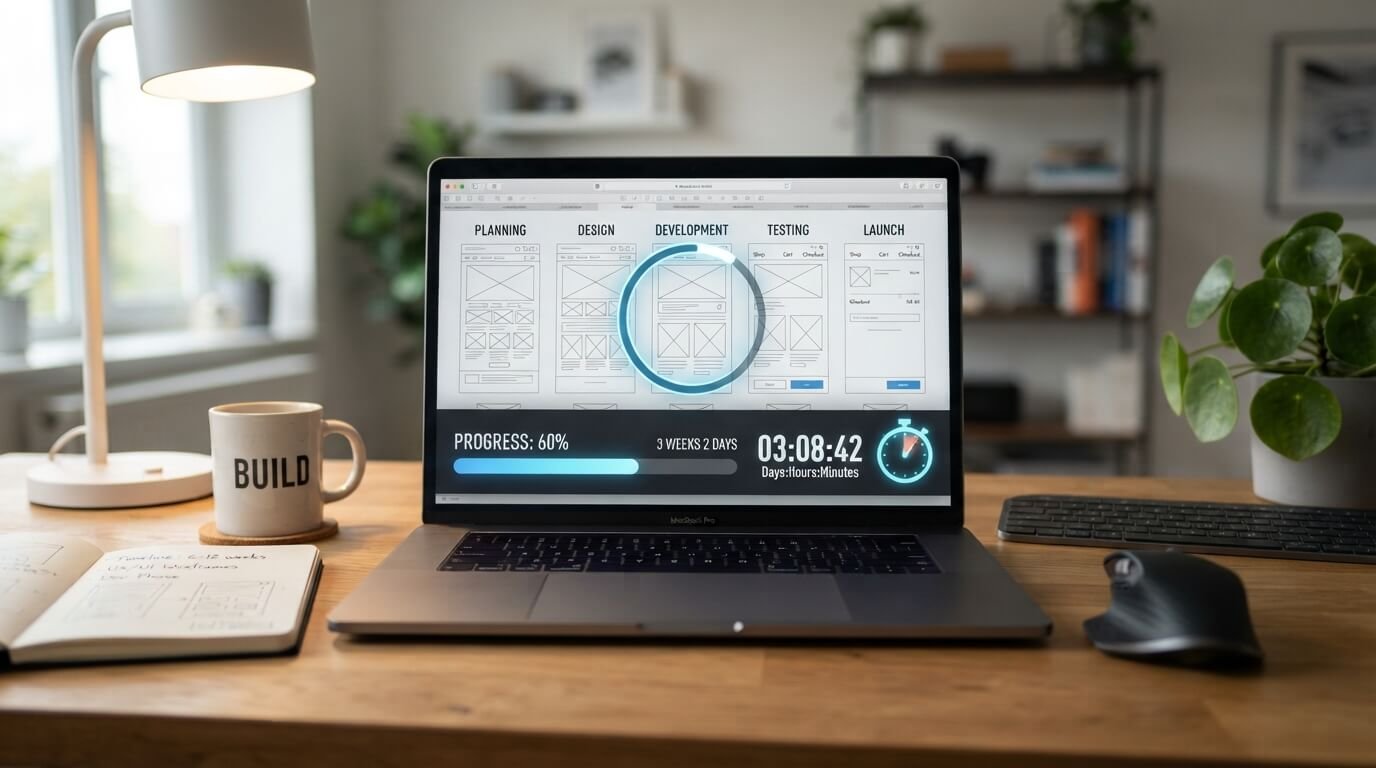
Building an digital storefront typically takes between 4 weeks and 9 months (1 to 36 weeks) from initial technical strategy to public release. A standardized, pre-built template store can launch in 2 to 6 weeks, whereas a mid-market platform requiring custom design elements and ERP integrations requires 3 to 5 months. Highly complex enterprise platforms featuring headless architecture, multi-warehouse inventory synchronization, custom business workflows, and bespoke integrations can take anywhere from 6 to 12 months. Key variables influencing this timeline include catalog complexity, custom interface requirements, third-party backend integrations, and content readiness.
When planning a modern eCommerce Development project, business decision-makers must evaluate speed-to-market against operational functionality. While turnkey solutions offer rapid deployments, scalable architecture demands rigorous engineering, security auditing, and system synchronization. Industry experts like High10 emphasize that setting realistic development benchmarks prevents costly scope creep, security vulnerabilities, and launch delays.
eCommerce Website Building Timelines: At a Glance
The time required to launch an online store varies dramatically based on architectural complexity, customization, platform choices, and organizational readiness. Below is an overview of baseline timelines across different build tiers.
| Store Tier & Complexity | Average Timeline | Primary Tech Stack / Platform | Key Deliverables |
|---|---|---|---|
| Turnkey / Basic | 2 – 4 Weeks | Shopify, WooCommerce Standard | Pre-built themes, basic payment integration, up to 100 SKUs, standard shipping rules. |
| Custom Mid-Market | 3 – 5 Months | Shopify Plus, BigCommerce, Custom Woo | Bespoke design, mid-level ERP/CRM integration, custom checkout flows, up to 10,000 SKUs. |
| Enterprise / Multi-Store | 6 – 9 Months | Adobe Commerce (Magento), Salesforce Commerce Cloud | Multi-region, multi-currency, complex database architecture, deep legacy software integration. |
| Headless / Composable | 6 – 12 Months | Commercelayer, Shopify Headless, Next.js, Strapi | Decoupled frontend/backend, microservices architecture, ultra-low latency edge delivery. |
Phase-by-Phase Timeline Breakdown for eCommerce Development
A structured project management model splits the build lifecycle into distinct operational phases. Skipping or rushing any phase often results in technical debt, post-launch site instability, or failed customer transactions.
Phase 1: Discovery, Strategy, and Requirement Gathering (1 – 3 Weeks)
The discovery phase sets the foundation for the entire build. Engineers, solution architects, and stakeholders meet to define core functional requirements, outline customer journeys, and map out backend architecture.
- Technical Specifications Document (TSD): Outlining functional requirements and system boundaries.
- Data Modeling: Defining stock-keeping unit (SKU) attributes, taxonomy, variable combinations, and category trees.
- System Integration Mapping: Identifying requirements for payment gateways, inventory management software, and shipping carriers.
- Project Roadmap: Establishing sprint schedules, resource allocations, and critical path milestones.
Phase 2: Architecture, Wireframing, and UX UI Design Services (2 – 6 Weeks)
User experience directly drives online conversions. During this phase, user interfaces are planned, tested, and approved before writing front-end code. Utilizing professional UX UI Design Services ensures the buyer path is intuitive, accessible, and optimized for mobile devices.
Design teams generate desktop and mobile wireframes, prototype high-friction touchpoints like cart drawers and single-page checkouts, and build atomic design systems. Custom design work requires review loops; stakeholders should account for 2 to 3 iterations before final visual sign-off.
Phase 3: Core Platform Setup and Frontend/Backend Engineering (4 – 12 Weeks)
This is the most time-intensive phase of overall website development. Developers set up staging environments, configure platform core modules, write custom code, and program user interface components.
| Engineering Track | Key Focus Areas | Estimated Duration |
|---|---|---|
| Frontend Engineering | HTML5/CSS3/JavaScript frameworks, responsive layouts, client-side state management, core web vitals optimization. | 3 – 6 Weeks |
| Backend Engineering | Database schema configuration, custom business rules, API endpoint development, tax & shipping calculation engines. | 4 – 8 Weeks |
| Middleware & Workflows | Webhook configuration, event queues, automated transactional communication, inventory sync services. | 2 – 4 Weeks |
Phase 4: Product Catalog Ingestion, Content Preparation, and Website Migration (2 – 6 Weeks)
Populating an online store with clean data is a common bottleneck. Importing thousands of SKUs with variant options, high-resolution imagery, meta properties, and localized pricing demands meticulous organization.
When transitioning from an older system, executing a precise website migration strategy is essential. This includes mapping legacy product IDs to new database fields, preserving historical order logs, maintaining account credentials where possible, and instituting comprehensive 301 redirect maps to retain existing search visibility.
Phase 5: Quality Assurance, Security Audits, and Load Testing (2 – 4 Weeks)
Before public launch, the store must undergo extensive testing across multiple devices, platforms, operating systems, and network conditions.
- Functional Testing: Verifying cart calculations, discount rules, tax estimations, and multi-currency conversions.
- Payment Gateway Validation: Executing live test transactions through gateways like Stripe, PayPal, and Authorize.net using live merchant credentials.
- Security and PCI-DSS Audits: Penetration testing, vulnerability scanning, SSL configuration, and ensuring strict compliance with credit card processing standards.
- Performance & Load Testing: Simulating traffic surges (e.g., Black Friday loads) using tools like Apache JMeter or k6 to evaluate response times under stress.
Phase 6: Deployment, Go-Live, and DNS Propagation (1 – 2 Weeks)
The deployment phase converts the staging site into a live digital business platform. DNS records are updated, production API keys are activated, search engines are re-indexed, and live transactions are verified in real time.
| Development Phase | Basic Store (Weeks) | Mid-Market Store (Weeks) | Enterprise Store (Weeks) |
|---|---|---|---|
| 1. Discovery & Strategy | 1 | 2 – 3 | 4 – 6 |
| 2. UX/UI Design | 1 – 2 | 3 – 5 | 6 – 10 |
| 3. Development & Build | 2 – 3 | 6 – 10 | 12 – 20 |
| 4. Data & Migration | 1 | 2 – 4 | 4 – 8 |
| 5. QA & Security Testing | 1 | 2 – 3 | 3 – 6 |
| 6. Deployment & Launch | 0.5 | 1 | 1 – 2 |
| Total Estimated Time | 6.5 – 8.5 Weeks | 16 – 26 Weeks | 30 – 52 Weeks |
Key Factors That Directly Impact Your eCommerce Launch Schedule
No two digital retail projects are identical. Several technical and operational factors influence whether a site launches on schedule or faces delays.
1. Custom Interface Design vs. Pre-Engineered Themes
Using commercial themes speeds up launch dates because the structural CSS/JS framework, grid system, and layout templates are already built. However, themes can bring code bloat and design constraints. Investing in tailored website design services allows brands to create unique visual layouts and streamlined customer flows, though it requires additional design review cycles and custom CSS/JS compilation.
2. Third-Party Integrations and Business Systems
Standalone stores that rely entirely on basic platform software launch much faster than systems connected to corporate IT infrastructure. Real-time syncing requires building secure connections to backend platforms.
- Enterprise Resource Planning (ERP): Connecting to SAP, Netsuite, or Microsoft Dynamics for inventory tracking, purchase orders, and financial logging.
- Automated Business Systems: Deploying custom business system development solutions to handle B2B approval workflows, custom pricing tier calculations, and automated purchase approvals.
- Customer Relationship Management (CRM): Executing specialized CRM Development to stream real-time purchase data into platforms like Salesforce or HubSpot for automated marketing lifecycle triggers.
- Warehouse Management Systems (WMS): Linking full-fillment operational hubs with live stock levels and automated shipping label generation.
3. Data Ingestion, Catalog Structure, and Data Cleanliness
Migrating messy, unstructured product data adds significant manual effort to a project timeline. Missing image assets, inconsistent attribute mapping, non-standardized sizing definitions, and duplicate inventory records force engineering teams to pause development to clean and sanitize incoming databases.
Custom Code vs. SaaS Platforms: Time to Market Analysis
Choosing the right platform is one of the biggest architectural decisions affecting long-term flexibility and time-to-market. Below is a comparative breakdown of development speeds across major e-commerce deployment options.
| Platform Architecture | Typical Development Speed | Technical Complexity | Ideal Business Use-Case |
|---|---|---|---|
| SaaS (e.g., Shopify, BigCommerce) | Fast (2 – 10 Weeks) | Low to Medium | Direct-to-Consumer (DTC) brands needing rapid deployment and minimal infrastructure maintenance. |
| Open-Source (e.g., WooCommerce, Magento) | Moderate (8 – 20 Weeks) | Medium to High | Businesses needing full ownership of their underlying server code, database structure, and hosting setup. |
| Headless / API-First (Composable) | Extended (16 – 36 Weeks) | Very High | Enterprise brands needing omni-channel delivery, custom frontend frameworks, and ultra-fast page speeds. |
Common Project Bottlenecks and How to Mitigate Them
Project delays are rarely caused by slow code execution alone. More often, organizational friction, delayed reviews, missing assets, and changing scope stall progress.
Establishing clear mitigation protocols early helps keep teams aligned and on schedule.
| Common Delay Factor | Root Cause | Mitigation Strategy |
|---|---|---|
| Delayed Content Delivery | Copywriting, brand photography, and legal disclaimers not ready before development finishes. | Begin asset production during Phase 1. Use temporary mock content early in the build. |
| Scope Creep | Adding new features mid-build without adjusting deadlines or resources. | Stick to a strict Minimum Viable Product (MVP) model. Schedule non-essential ideas for Post-Launch Phase 2 sprints. |
| Third-Party API Failures | Outdated documentation or restricted access to client backend systems. | Audit all external API endpoints, rate limits, and access privileges during the discovery phase. |
| Slow Stakeholder Approvals | Unclear decision-making structures across design and management teams. | Assign a single Product Owner with direct sign-off authority for design and feature approvals. |
Actionable Strategies to Accelerate Your eCommerce Build
If launch speed is critical for key trading periods (such as Black Friday or seasonal shifts), teams can apply specific strategies to shorten development timelines without compromising software quality.
- Adopt a Minimum Viable Product (MVP) Strategy: Focus on core revenue-generating functionality for launch. Defer secondary features like loyalty programs, AI recommendations, or advanced filtering to post-launch optimization releases.
- Leverage Automation Frameworks: Modern infrastructure automation reduces repetitive task overhead. Platforms and modern development tools simplify environment provisioning, database syncing, and release pipelines. Using established operational solutions like High10 helps automate integration workflows and keep project milestones on track.
- Work in Parallel Streams: Instead of waiting for design sign-offs before starting backend work, development teams can build backend data structures, configure database schemas, and create middleware in parallel using wireframes as structural guides.
- Use Pre-Built Integration Middleware: Avoid building custom API connectors from scratch whenever possible. Standard integration platforms dramatically reduce technical delivery schedules.
Post-Launch Realities: Ongoing Maintenance and Optimization
Launching the platform is an important milestone, but development work continues after go-live. Every digital retail store requires ongoing maintenance to ensure stability, continuous security, and optimal conversion performance.
Budgeting for an ongoing website maintenance service helps keep security patches up to date, updates core software, manages database growth, and maintains server speed as sales volume grows. System maintenance should also cover iterative user experience tweaks, automated regression testing, and real-time uptime monitoring to ensure continuous availability.
How long does it take to build a basic online store?
A basic online store built on standard SaaS platforms like Shopify or WooCommerce using pre-designed templates typically takes between 2 to 4 weeks. This timeline assumes that product data, photography, branding assets, and payment credentials are fully prepared before development starts.
Can an e-commerce website be completed in 2 weeks?
Yes, an e-commerce site can launch within 2 weeks if it uses a turnkey, off-the-shelf theme, straightforward payment gateway setups, standard shipping rules, and a small catalog (under 50 products) with no custom integrations or custom code required.
Why do enterprise custom builds take 6 months or longer?
Enterprise builds take longer because they involve custom system architecture, bespoke front-end designs, multi-layer approval workflows, security compliance audits, and custom software integrations with legacy ERPs, CRMs, and warehouse platforms. They also require thorough performance and security testing before deployment.
How does data migration impact the launch schedule?
Migrating complex legacy data can add 2 to 6 weeks to a project schedule. Clean data transfers quickly, but unsanitized data with broken categories, missing product details, or conflicting SKU attributes requires manual cleanup, database restructuring, and detailed 301 redirect mapping.
What is the best way to speed up my e-commerce launch date?
The fastest way to accelerate launch timelines is to focus on a Minimum Viable Product (MVP) model. Launching with essential core purchase features first allows you to gather real-world customer data, while saving non-essential features for secondary post-launch development phases.
Prefer a shorter version? Download the PDF guide for a quick summary of the key points covered in this article.
Not sure how this applies to your business?
A 45 minute call, no cost, no obligation. You leave with a scope, an honest timeline and a fixed written quote.