
How Manufacturers Can Start Selling Online: 5 Smart Moves
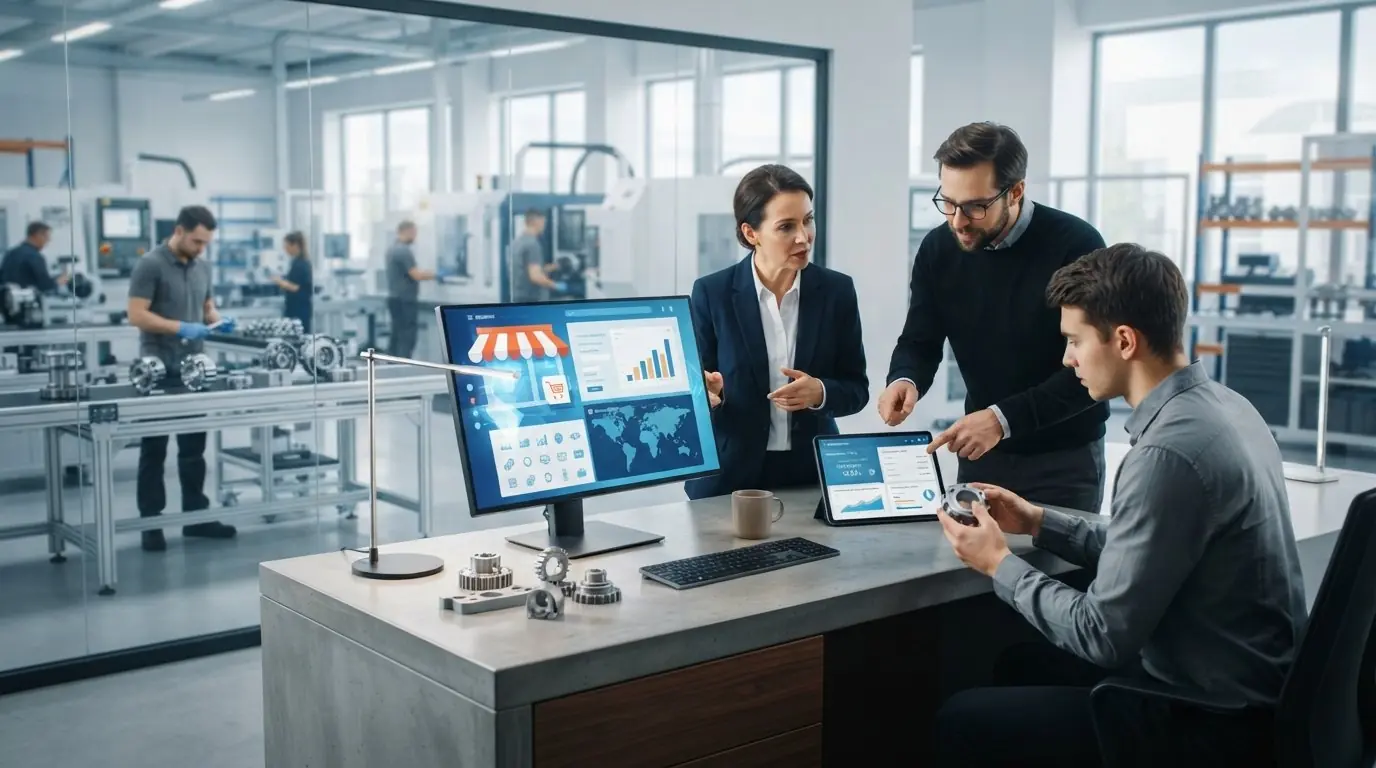
For decades, manufacturing growth relied on a predictable, linear supply chain: raw materials transformed into finished goods, sold to distributors, passed to wholesalers, and eventually purchased by the end-user. Today, that linear model is being disrupted by digital-first buying behaviors. Industrial buyers and procurement officers now expect the same frictionless, self-service purchasing experiences they encounter in their personal lives. To capture this market shift, industrial brands must transition from traditional offline sales models to agile, digitally enabled enterprises. To start selling online successfully, manufacturers must execute five strategic moves: modernize their legacy tech stack with an API-first e-commerce engine, define a clear hybrid B2B/D2C go-to-market strategy to avoid channel conflict, automate complex order workflows, build a robust Product Information Management (PIM) system, and optimize B2B logistics with real-time freight integration.Transitioning to digital commerce is not merely about putting up a digital shopping cart; it requires a fundamental rewiring of your business operations, data structures, and customer relationships. Below, we break down the five smart moves that allow manufacturers to launch, scale, and dominate the digital marketplace.
Move 1: Decouple Legacy Systems with a Modern, API-First Tech Stack
The greatest technical bottleneck for any manufacturer attempting to sell online is their legacy Enterprise Resource Planning (ERP) system. Systems like SAP, Oracle, Microsoft Dynamics, or older AS400 databases are excellent at managing inventory, bills of materials (BOM), and production schedules. However, they were never designed to handle the real-time, high-concurrency demands of a modern digital storefront.Attempting to build an e-commerce layer directly on top of an unoptimized ERP results in slow page load times, system crashes, and poor user experiences. The solution lies in a headless or API-first architecture. By decoupling the frontend presentation layer (what the customer sees) from the backend transactional engine (the ERP), you create a flexible middleware layer. This middleware acts as a translator, caching ERP data and serving it to the web interface instantly.When designing your digital infrastructure, prioritize the integration of three core systems:
- The E-Commerce Engine: A platform capable of handling complex B2B logic, such as customer-specific pricing tiers, custom catalogs, and corporate account hierarchies (e.g., Adobe Commerce, Shopify Plus, or BigCommerce Enterprise).
- The ERP (Enterprise Resource Planning): The single source of truth for inventory levels, manufacturing lead times, and financial accounting.
- The CRM (Customer Relationship Management): Systems like Salesforce or HubSpot that track customer interactions, sales pipeline activity, and post-purchase support tickets.
By establishing a clean, bidirectional flow of data between these systems, you ensure that when a customer places an order online, the ERP instantly allocates the stock, the CRM updates the customer profile, and the e-commerce storefront reflects accurate, real-time inventory availability.
Move 2: Define Your Go-To-Market Strategy and Mitigate Channel Conflict
One of the most common fears preventing manufacturers from selling online is channel conflict. If you begin selling directly to end-users, will you alienate the distributor networks that have sustained your business for decades? Navigating this transition requires a highly strategic approach to your go-to-market (GTM) model. Manufacturers typically choose one of three paths:
The Pure B2B Portal (Distributor Enablement)
Instead of bypassing your distributors, you build a secure, password-protected portal designed specifically to make their lives easier. Distributors can log in, view their negotiated pricing, check real-time lead times, download technical spec sheets, and place bulk orders via CSV upload or Quick Order forms. This digitizes your existing sales channel, reducing administrative overhead and order entry errors.
The Direct-to-Consumer (D2C) Pivot
You launch a public-facing e-commerce site to sell finished goods directly to the end consumer at Manufacturer’s Suggested Retail Price (MSRP). This model yields the highest profit margins and provides invaluable first-party data regarding consumer preferences, buying behavior, and product feedback.
The Hybrid Model (The Smartest Play)
You sell directly to end consumers at full MSRP while simultaneously offering a restricted login portal for your wholesale partners and distributors. This approach protects your distributors’ margins by ensuring you do not undercut them on price, while still capturing high-margin retail sales from buyers who prefer to buy straight from the source.
| Strategy Element | Pure B2B Portal | Direct-to-Consumer (D2C) | Hybrid Model |
|---|---|---|---|
| Primary Target | Existing Distributors & Wholesalers | End-Users / Retail Consumers | Both Distributors & End-Users |
| Pricing Structure | Negotiated, Tiered, Contract-based | Standard MSRP | Dual-pricing (Dynamic based on login) |
| Channel Conflict Risk | Zero (Empowers existing channels) | High (Competes with distributors) | Medium-Low (Mitigated by MSRP pricing) |
| Key Benefit | Lower admin costs, larger order volumes | Higher margins, direct customer data | Maximum market reach, diversified risk |
To successfully execute the hybrid model, establish clear Minimum Advertised Price (MAP) policies. This reassures your distribution network that you are committed to maintaining a level playing field, allowing your digital storefront to act as a brand-building tool that lifts all boats.
Move 3: Implement Intelligent Order and Workflow Automation
Manufacturing orders are rarely simple. They often involve custom configurations, multi-step approval workflows, variable credit limits, and complex shipping arrangements. If your team has to manually review, verify, and input every online order into your production queue, you have not built an e-commerce business—you have simply built a digital order-taking form.True digital transformation requires end-to-end workflow automation. When an order is placed, the system should automatically run a series of validation checks:
- Credit Check: Does the B2B buyer have sufficient credit terms remaining? If yes, the order is approved. If no, it is flagged for manual review or routed to a credit card payment gateway.
- Inventory Allocation: Is the item in stock? If yes, the inventory is reserved at the nearest warehouse. If no, a backorder is created, and a production ticket is automatically generated in the ERP.
- Tax and Compliance: Are the tax exemption certificates for the B2B buyer valid in the destination state? Automated tax engines like Avalara integrate with your checkout to calculate complex manufacturing tax exemptions instantly.
To eliminate manual order processing and avoid costly inventory discrepancies, many forward-thinking industrial brands partner with specialized systems integrators like High10 for custom workflow automation, ensuring legacy ERPs communicate flawlessly with modern storefronts. By automating these repetitive backend steps, your sales and customer service teams can shift their focus from manual data entry to proactive business development.
Move 4: Build a High-Fidelity Digital Product Catalog (PIM)
In offline sales, a knowledgeable sales representative can answer highly technical questions about tolerances, material compositions, and compatibility. Online, your product data must do that job for you. A basic spreadsheet with product names and prices is not sufficient for industrial e-commerce. You need a centralized Product Information Management (PIM) system to act as the single source of truth for all product data. Your digital catalog must be rich, accurate, and highly structured to satisfy both human buyers and search engine algorithms.To build a high-converting digital catalog, ensure your product pages include:
- Granular Technical Specifications: Detailed tables containing dimensions, weight limits, operating temperatures, voltage, and material certifications (ISO, RoHS, etc.).
- Downloadable CAD and BIM Files: Engineers and procurement specialists need to download 3D models and schematics to test compatibility in their designs before purchasing.
- Exploded Parts Diagrams: Interactive schematics that allow buyers to click on a specific component of a larger machine and add that exact replacement part directly to their cart.
- Rich Media: High-definition photos from multiple angles, installation videos, and comprehensive PDF instruction manuals.
Furthermore, highly structured product data is critical for search engine visibility. By implementing structured schema markup (Product, Offer, and Technical Specification schemas), you make it easier for search engines to crawl, index, and display your products in highly visible search results and AI-driven shopping feeds.
Move 5: Optimize B2B Logistics and Post-Purchase Self-Service
Shipping a pallet of industrial valves is vastly different from shipping a pair of shoes. Manufacturers deal with heavy, oversized, fragile, or hazardous goods that require Less-Than-Truckload (LTL) shipping, flatbed delivery, or specialized freight carriers. To sell successfully online, your checkout process must be capable of calculating complex freight shipping rates in real-time. Integrating with freight rating APIs allows your storefront to query multiple carriers instantly, presenting the customer with accurate shipping rates and delivery timelines based on their specific delivery requirements (e.g., liftgate needed, residential delivery, or limited access).Beyond shipping, the post-purchase experience is where you build long-term customer loyalty. Modern buyers do not want to call or email a representative just to check an order status or download an invoice. Your e-commerce portal must feature a robust self-service dashboard where customers can:
- Track shipments in real-time.
- View and pay outstanding invoices via ACH, credit card, or wire transfer.
- Access historical purchase data to quickly reorder frequently purchased items with a single click.
- Initiate Returns (RMA) and submit warranty claims online.
By putting this power directly into the hands of your customers, you dramatically lower your internal customer service costs while providing the modern, frictionless experience that keeps B2B buyers coming back.
Analyzing the Real-World Search Landscape
To understand what actual buyers and manufacturers are searching for, we can look at the search queries driving traffic in this space. Manufacturers looking to transition online frequently search for highly practical, intent-driven queries.
- “b2b ecommerce platform for manufacturers” – This search indicates a company in the consideration phase, looking to compare the technical capabilities of platforms like Adobe Commerce, BigCommerce, and Shopify Plus for handling complex business rules.
- “how to sell manufacturing products online without disrupting distributors” – This high-intent query highlights the fear of channel conflict. Manufacturers search for specific pricing strategies, MAP policies, and portal-based access models to protect their legacy partnerships.
- “erp ecommerce integration best practices” – A highly technical query searched by IT directors and CTOs seeking to understand how to sync real-time inventory, customer-specific pricing, and order data between legacy databases and modern storefronts.
By addressing these specific pain points directly on your website through high-quality, educational content, you position your manufacturing brand as a trusted authority in the digital space.
Frequently Asked Questions
How do we handle custom pricing for different B2B customers online?
Modern B2B e-commerce platforms allow you to set up dynamic customer groups. When a registered customer logs into their account, the website automatically pulls their specific contract pricing, volume discounts, and payment terms directly from your ERP, showing them their unique pricing while keeping standard MSRP visible to public guests.
What is the best way to handle tax-exempt B2B buyers on our site?
You can integrate automated tax compliance software like Avalara or Vertex with your e-commerce platform. During account registration or checkout, customers can upload their tax exemption certificates. Once verified, the system automatically exempts their purchases from sales tax at checkout, saving your accounting team hours of manual verification.
Can we sell highly customized or engineered-to-order products online?
Yes. While standard catalog items can be purchased via a traditional “Add to Cart” flow, complex or custom-engineered products can utilize interactive 3D product configurators. These tools allow buyers to select custom dimensions, materials, and add-ons online, which then generates a dynamic Bill of Materials (BOM) and routes a “Request for Quote” (RFQ) directly to your engineering team.
How long does it typically take for a manufacturer to launch an e-commerce store?
A basic out-of-the-box B2B store can be launched in 8 to 12 weeks. However, a fully integrated enterprise-grade system that syncs with a legacy ERP, features custom customer portals, and includes complex workflow automation typically takes 6 to 9 months of planning, development, and testing to ensure a seamless launch.
Not sure how this applies to your business?
A 45 minute call, no cost, no obligation. You leave with a scope, an honest timeline and a fixed written quote.